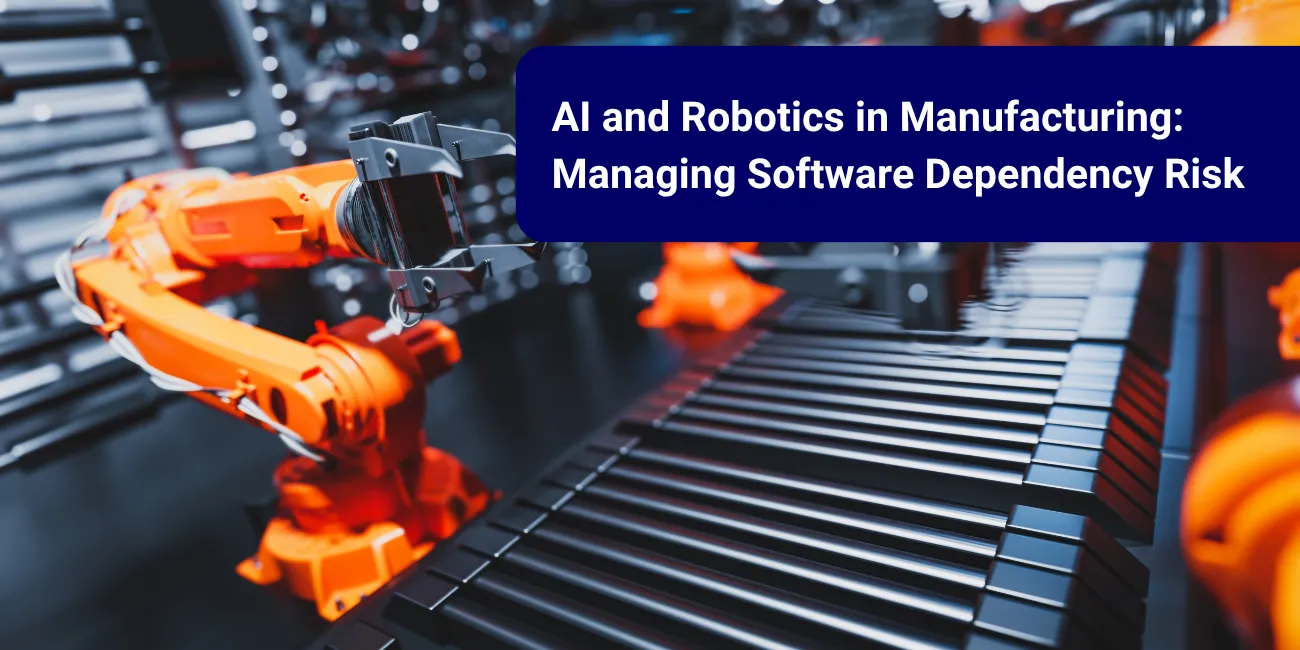
AI and Robotics in Manufacturing: Managing Software Dependency Risk
Imagine investing in a robotic production cell or an artificial intelligence (AI) inspection system, only to find its software can no longer be supported. The equipment remains on the factory floor, but a fault, update or new connection now depends on knowledge and access you do not have. Some systems keep running while becoming harder to maintain; others become unavailable. What would keep your investment useful if support ended?
The scale of automation makes this worth considering. In its World Robotics 2026 release, the International Federation of Robotics reported five million industrial robots operating in factories worldwide in 2025, with over 600,000 new installations that year. These figures describe industrial robotics, not every AI application. They put the purchasing question in context: what will keep the software behind your technology available and maintainable?
The central question is: if your manufacturing software supplier became unavailable, how would you continue operating? Software escrow for manufacturing can provide a practical route to access the technical materials needed for maintenance or recovery, while verification testing establishes that the materials held in trust are usable if they ever need to be released. Neither replaces the expertise, operating environment or disaster recovery planning needed. The useful test is whether a capable team could understand the installation, reproduce its build and maintain or restore the functions your business needs.
What are you relying on beyond the equipment itself?
Manufacturing software is often configured for a particular site, process or production line. A replacement specialist needs to understand that installation, not simply receive a copy of the application.
A robotic arm may rely on proprietary control software. A 3D printer may need design-preparation tools, machine settings and production-management applications. An AI inspection system may depend on a trained model, supporting data and third-party infrastructure. Quality control and scheduling can also rely on cloud platforms or application programming interfaces (APIs), connections that let systems exchange information.
Buying another licence may not resolve these dependencies. Replacement can require integrations, equipment changes, testing and retraining. Start by understanding the existing setup and the production activities it supports. That connects technical handover to manufacturing business continuity alongside machinery, facilities, cyber-security and the physical supply chain.
Would the system stop working or become harder to maintain?
The answer depends on how the software is delivered. Maintaining a local installation and restoring an unavailable hosted service are different tasks; the handover must match the outcome you need.
For local software, can they work from the code and instructions?
Locally installed software may keep running after its supplier ceases trading. The difficulty can emerge later: a bug needs fixing; an operating system changes or new equipment needs connecting. Without source code, build instructions, configuration files and technical documentation, an alternative developer will struggle to maintain it. A working installation is not proof that its maintenance can be handed over.
For cloud software, can the operating environment be recreated?
Software as a service (SaaS) is accessed online and operated by its provider. Restoring a scheduling, warehouse-management or quality-monitoring platform may require code, databases, cloud configurations, deployment scripts and documentation. A data backup alone does not explain how to run the application. SaaS escrow and continuity must therefore consider historical data, the environment needed to restore service and future software maintenance or replacement.
Without a software escrow or continuity plan for the existing critical solution, you will need to procure and implement a replacement service, if one is available in the market. Further development may also be needed to meet your specific requirements. The whole process can take many months or even years.
For robotics and AI, what knowledge must accompany the files?
Automated systems may need controller configurations, interface specifications and specialized dependencies alongside code. AI adds model files, data-processing pipelines and external-service dependencies. The requirements differ between maintaining existing functions, restoring an application elsewhere and supporting future development. Technical and model-management expertise remain essential: documentation cannot supply the skills to do the work.
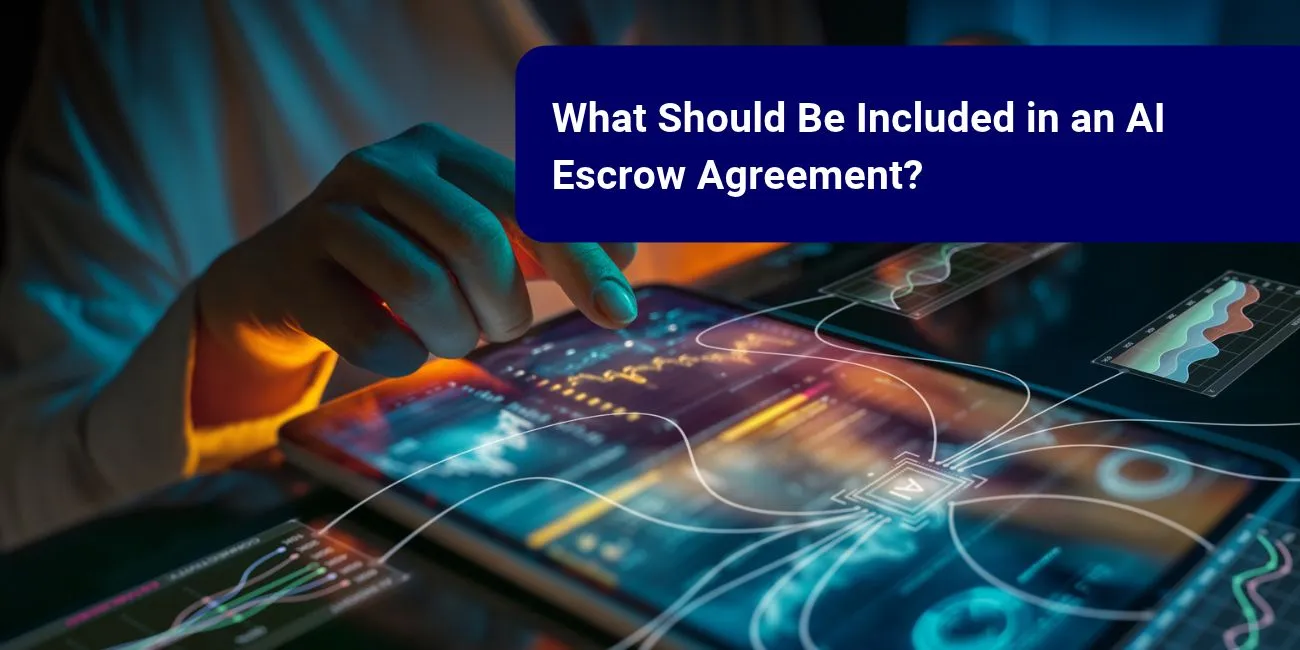
Our guide to what should be included in an AI escrow agreement explores how the recovery objective shapes these requirements.
What evidence shows that the recovery materials are usable?
A useful handover explains how the software is built, rather than simply listing files. In The Escrow Company’s verification services, a consultant observes and documents the build and deployment processes through a secure remote connection. The work records the test environment and identifies third-party dependencies used in the build and end-to-end deployment processes, helping make supplier-held knowledge usable by the customer.
Where the objective is for another developer to take over maintenance, a Code Quality Audit can provide further assurance about the structure, readability and maintainability of the source code. This is particularly useful where custom development has occurred.
That evidence has boundaries. Observing a successful build does not, by itself, prove that a replacement team can maintain every component or recover an entire production line. The agreed testing scope and environment determine what the results demonstrate. Keep that distinction clear when assessing whether the materials support your particular handover.
How does software escrow give an authorized route to the materials?
Under a software escrow agreement, the software supplier deposits the agreed materials with an independent third-party escrow agent. The contract sets out when the authorized customer can access those materials and how they may be used for maintenance or recovery. The materials required should reflect the intended task, rather than a standard collection assumed to suit every system.
The supplier does not hand its intellectual property directly to the customer during normal service. Independent custody and agreed access and usage conditions balance the customer’s continuity needs with the supplier’s confidentiality. Obtaining materials and having permission to use them are incorporated into the agreement.
Software escrow alone does not guarantee uninterrupted operations or prevent incidents in production. It sits alongside disaster recovery, data backups and supplier due diligence, and addresses different risks associated with supplier failure. A practical plan still needs people, infrastructure, rights and a realistic recovery timescale. Testing the deposited materials through verification is also important to the success of any software escrow arrangement.
What should you establish before investing or renewing?
1. Which production activities must be supported?
Identify the consequences of losing availability or maintenance of a critical third-party software solution: could production stop, safety be affected, deliveries slip or essential processes be interrupted if the supplier failed or couldn’t deliver services? Prioritize the applications with the greatest business impact, then define the functions the replacement team must preserve. This establishes the task before you choose a service.
2. Which materials and dependencies make that work possible?
Ask the supplier to connect the deposit to the maintenance, build or deployment task. Check that the code, configuration, components, databases, interfaces and instructions fit together, including the cloud or AI requirements above. A long inventory is less useful than an explanation of how a capable team would use it.
3. What permits release and subsequent use of the materials?
Check the agreed release events, such as insolvency or inability to provide support. Separately, establish the rights to use released materials for maintenance or recovery, including work by an alternative specialist where agreed. The terms must support the intended handover while remaining workable for the supplier.
4. Who will restore and operate the system, and how quickly?
Decide whether your internal team or an external provider will take responsibility, and whether interim support is required from the escrow agent. Identify the expertise, infrastructure, access rights and equipment needed to restore and operate the application. Clear documentation helps, but people still need the capability and resources to use it.
Set the recovery objective: which functions and business activities must be restored, and by when? A business tolerating several weeks of transition needs a different arrangement from one requiring continuous access to production management. The plan must reflect that timescale, not merely confirm that files exist.
5. What does the testing demonstrate?
Basic file-integrity checks establish that deposited files are accessible. Verification testing ensures the materials are complete and usable. The process can identify missing dependencies, files and documents, as well as gaps in build or deployment procedures. These checks provide evidence of recover-ability and assist with knowledge transfer, rather than guaranteeing uninterrupted production services.
Which arrangement supports the intended handover?
Source code escrow may suit a local application where the main need is code and documentation for maintenance. SaaS escrow extends the agreed materials to cloud assets, data and supporting components needed for recovery and redeployment from scratch.
Depending on the service, support may involve access to an existing environment, verified rebuild materials or a prepared secondary recovery environment. Particularly critical services may need managed continuity. Choose around the outcome (maintenance, recovery or transition) and match the materials, rights and responsibilities to it.
What can a real handover teach us?
Our airline SaaS continuity case study shows the preparation behind an actual handover. A replicated cloud environment, deposits of code, databases and deployment materials, and build and release verification were in place before the booking-system supplier entered administration. The technical team activated and supported the environment on an interim basis, then transferred the system to the airline to manage independently longer term. This is a cross-industry example, not a manufacturing recovery case; its outcome depended on that specific arrangement. The lesson is to prepare and test the environment, then plan operation and transfer of responsibility.
When should you prepare the technical handover?
Prepare while the supplier can explain the system, ideally before it becomes embedded in production. At purchase or renewal, bring procurement, operations, engineering, IT and legal teams together to agree documentation, access, responsibilities, acceptable downtime and testing. This supports the adoption of robotics, 3D printing and AI. It also means questions about a potential forced recovery or exit strategy are addressed before the supplier fails, enters insolvency or does not deliver as contracted.
The objective is a useful route forward for the technology you depend on. Establish what must remain available, what can be maintained or restored, who will do the work and what remains unproven. That is a stronger basis for planning than a collection of files or reassurance alone.
At The Escrow Company, that means considering what your team can realistically take on and where specialist help is needed. At The Escrow Company, that means considering what your team can realistically take on and where specialist help is needed. Our software escrow services help businesses identify the materials, access rights and recovery support needed to protect critical applications. The documented verification work above helps turn supplier knowledge into practical evidence, while the agreement respects the supplier’s intellectual property.
Talk to The Escrow Company about the software your manufacturing operations depend on. Our team can help you explore software escrow, independent verification and SaaS continuity solutions that support your business continuity requirements.